
Have you ever woken up with a stiff neck, sore back, or aching shoulders after a long day? That uncomfortable feeling is often called musculoskeletal pain. In simple terms, it is pain that affects your muscles, bones, joints, ligaments, or tendons, the parts of your body that help you move and stay active. This kind of pain can come from everyday activities like poor posture, overuse, injury, or even stress. Fortunately, musculoskeletal pain is very common, and in many cases, it can be managed or prevented with the right care and habits.
In this guide, let’s talk about musculoskeletal pain in detail to make you understand how it is different from other types of pain.
Overview Of Musculoskeletal Pain
Musculoskeletal pain is pain that you feel in muscles and bones, in the tendons and ligaments that connect them, and in the nerves. It can be short-lived, such as sore muscles after a heavy workout, ot it can be ongoing, like arthritis or chronic back pain.
Common injuries, such as bruises, sprains, or fractures, can cause musculoskeletal pain, but overuse can also cause it. For example, sports or work can cause carpal tunnel pain, which is a type of musculoskeletal pain. However, some ongoing musculoskeletal pain does not have an obvious cause. Whatever its source, such pain can affect anyone at any age [1].
According to the World Health Organization, 20 to 33% of the world’s population has some form of chronic musculoskeletal pain, translating to 1.75 billion people globally.
Types of Musculoskeletal Pain
There are several types of musculoskeletal pain, including [2]:
- Muscle pain: such as muscle spasms, cramps, infections, injuries, or tumors.
- Joint pain: caused by stiffness, inflammation, and infection.
- Bone pain: from bone injuries and fractures.
- Tendon and ligament pain: caused by sprain, strains, or overuse.
What Does Musculoskeletal Pain Feel Like?
Musculoskeletal pain may vary depending on the underlying cause and affected tissues [3].
Bone pain: This typically feels achy and dull, as if the pain originates from deep within the body.
Joint pain: Pain in your joints may come and go or be constant. Sometimes your joint may feel sore, achy, or stiff. You might have a throbbing or burning sensation. For many individuals, joint pain gets better with rest.
Muscle pain: Muscle pain may present as a steady, deep ache or intermittent sharp pain. Some individuals have muscle pain throughout the body, while others have it in specific regions.
Tendon and ligament pain: This type of pain is worse when you move the affected area. The pain often feels very sharp.
Musculoskeletal pain can limit your range of motion. It may also cause
- Sleep disturbances
- Fatigue
- Stiffness.
Possible Causes
Musculoskeletal pain can arise from several reasons. Sometimes it occurs suddenly after a fall, an awkward movement, or an intense workout. Other times it builds up gradually. Everyday habits, prolonged sitting, repetitive motions, and stress can all contribute to pain over time. Factors such as age and existing medical conditions can also increase joint and muscle sensitivity, making each person’s experience with musculoskeletal pain unique.
Below, we have discussed some of the common causes of musculoskeletal pain [4].
Underlying musculoskeletal changes: Chronic conditions such as osteoporosis, osteoarthritis, or fibromyalgia can contribute to musculoskeletal pain. These conditions may make certain areas of your body more prone to discomfort over time. Injuries can leave lasting effects, leading to recurrent or persistent pain even after healing.
Muscle imbalances: When certain muscles are tighter or stronger than the others, it can put extra stress on your joints and other tissues, which may increase pain or injury. Muscle imbalances often develop from not changing positions enough, repeated movements, or consistently favoring one side of your body over the other.
Acute injuries: Accidents related to sports, falls, or car crashes can lead to injuries such as strains, sprains, fractures, or dislocations. Even daily movements can sometimes lead to an injury.
Overuse: Doing the same activity over and over, whether running or typing, can put extra strain on certain parts of your body. This repeated stress can lead to discomfort and irritation, making your joints and muscles feel sore or achy. Overuse can also cause fatigue in specific areas, making them more sensitive and prone to pain.
Aging: As you age, natural changes in your body can increase musculoskeletal pain, the same way you get gray hair or wrinkles. Balance issues may make falls more likely, while changes in bones from osteoporosis can increase the risk of fractures. Joints may become irritated or inflamed as cartilage changes, and decreased muscle strength can cause strains or sprains during everyday activities.
Lifestyle factors: Poor sleep, stress, eating habits, and not getting enough physical activity can all contribute to musculoskeletal pain and increase inflammation in your body. Supporting your overall well-being with healthy routines can help reduce the risk of musculoskeletal pain and support your body’s ability to recover from discomfort.
Duration of Musculoskeletal Pain
Musculoskeletal pain can be acute, meaning it is sudden and severe, or chronic, meaning it lasts longer. Acute musculoskeletal pain is temporary. But how long musculoskeletal pain lasts depends on the cause, intensity, and the treatment you receive [5].
Diagnosis
Your healthcare professional will first take a detailed medical history and ask about your symptoms, as musculoskeletal pain can have several causes. Expect to answer questions like:
- When did your pain begin?
- What were you doing at the time (for example, playing sports or working out)?
- What does it feel like?
- Where does it hurt?
- What makes it better or worse?
Your medical provider might press on or move the affected area into different positions to find the location of your pain. Several tests can help pinpoint the cause of your pain, including:
- Blood tests
- X-rays
- MRI scans
- Joint fluid testing.
Treatment for Musculoskeletal Pain
Your healthcare provider will recommend a treatment plan based on the severity and cause of the symptoms. Some of the effective treatment options for musculoskeletal pain are [6]:
Strengthening and stretching exercises: Therapies that can help the person learn how to manage pain and discomfort, maintain strength, and range of motion. The exercises can help the patients perform everyday activities in a way that doesn’t worsen the pain.
Injections: Anti-inflammatory medicines and anesthetics injected in or around the painful area can help alleviate pain.
Medications: Medications for musculoskeletal pain range from over-the-counter options like NSAIDs, acetaminophen, and topical gels for mild-to-moderate pain to prescription drugs for severe pain, including muscle relaxants (Carisoprodol available under the brand name Soma), stronger NSAIDs, and sometimes anticonvulsants.
Other treatment options may include:
- Low-impact exercises, such as walking and swimming.
- Heat or cold therapy.
- Joint replacement surgery
- Complementary therapies, such as massage and acupuncture
What Are The Possible Complications Of Not Treating Musculoskeletal Pain?
Without proper treatment, mild to severe injuries causing musculoskeletal pain can lead to chronic pain and mobility problems. This can negatively impact your quality of life and may prevent you from doing everyday tasks.
Because of this, it’s crucial to get medical attention for severe or persistent pain. The sooner you start treating your pain, the better.
How Can I Prevent Musculoskeletal Pain?
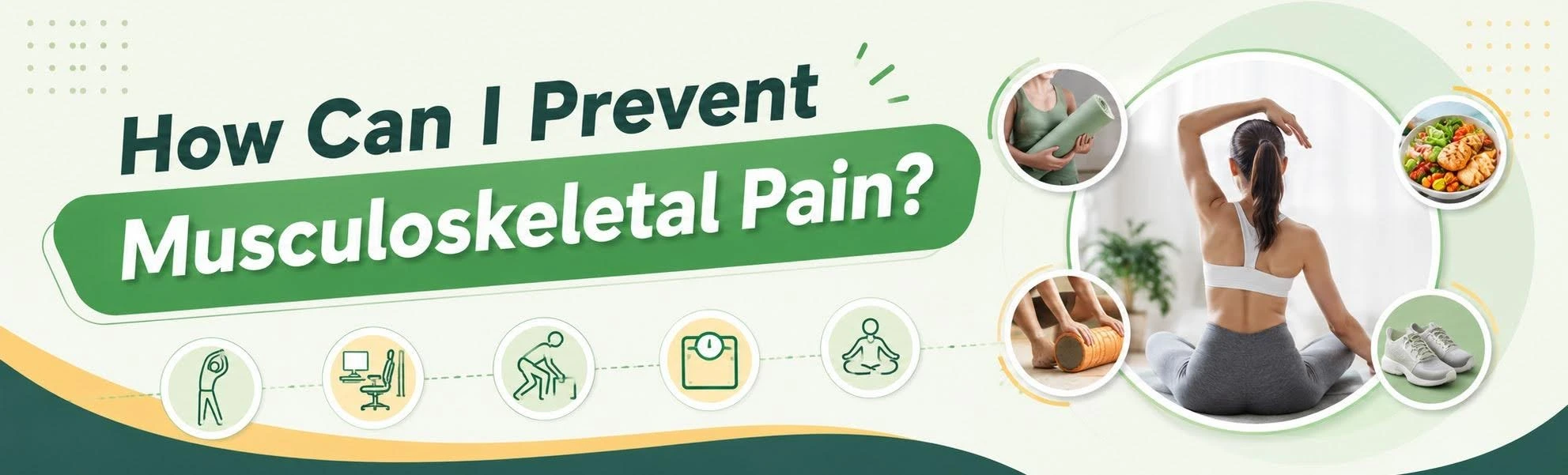
Maintaining healthy muscles, bones, and joints is important for preventing musculoskeletal pain. Some practical tips for preventing musculoskeletal pain are [7]:
Practice stress-relief techniques: Incorporate meditation, deep breathing, or mindfulness exercises into your routine to manage stress effectively.
Take regular breaks: Whether you are working at a computer or wrapping gifts, short breaks to stretch can help prevent muscle stiffness.
Maintain good posture: Be mindful of your posture, especially during prolonged periods of sitting. Consider using ergonomic cushions or furniture for added support.
Engage in low-impact exercise: Incorporate low-impact exercises such as swimming, walking, or gentle yoga into your routine to reduce stress and promote flexibility.
When To Call The Doctor
Musculoskeletal pain often improves with conservative management. If your pain is worsening, severe, or causing difficulty with everyday activities, including sleep, consult a medical professional. It is also a good idea to get medical attention if you have pain accompanied by:
- Unexplained weight loss
- Swelling
- Fever
- Progressive numbness or weakness
- Bruising.
Conclusion
Musculoskeletal pain is a common condition that affects the muscles, bones, joints, tendons, and ligaments, often interfering with daily activities and overall quality of life. It can develop from injuries, overuse, aging, poor posture, or underlying medical conditions. While many cases improve with rest, lifestyle changes, and conservative treatments, persistent or severe pain should not be ignored. Early diagnosis, proper treatment, and healthy habits such as regular exercise, good posture, stress management, and adequate sleep can help prevent and manage musculoskeletal pain effectively.
FAQs
What is the best medicine for musculoskeletal pain?
What kind of doctor treats musculoskeletal pain?
Can arthritis cause muscle pain?
Is arthritis a musculoskeletal disorder?
How to treat sore muscles?
References
- Musculoskeletal pain surgery & treatment, AuroraHealthcare.
- Musculoskeletal Pain - Symptoms, Causes, Diagnosis and Treatment, medparkhospital.
- Musculoskeletal Pain: What It Is, Symptoms, Treatment & Types, Cleveland Clinic.
- What is musculoskeletal pain? Causes, symptoms, and expert tips for relief, hingehealth
- What Could Be Causing My Musculoskeletal Pain? Healthline
- What to know about musculoskeletal disorders, medicalnewstoday
- Navigating Holiday Stress: A Guide To Preventing Musculoskeletal Pain, Sano