
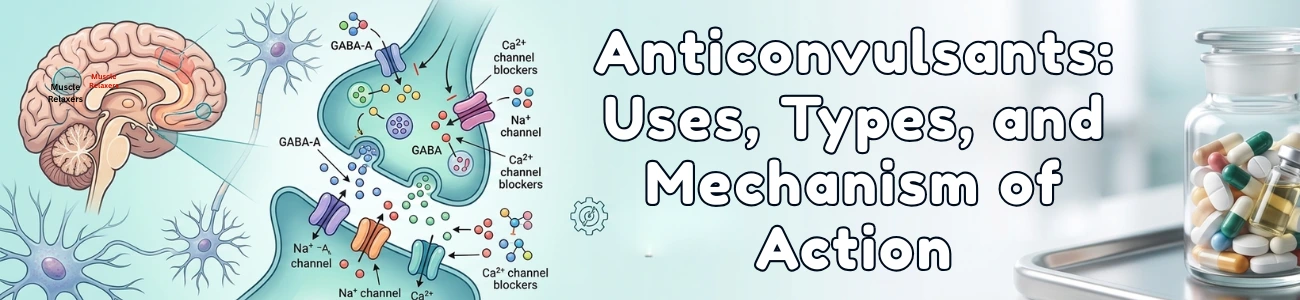
There are various types of anticonvulsant drugs, and they work by altering electrical activity in the brain to prevent seizures.
These medications come with various side effects; therefore, you should take them only if prescribed by a medical provider.
Suffering from seizures can feel overwhelming, but medications like anticonvulsants are a powerful tool. While developed to treat seizures, these medications have now become a go-to solution for a diverse range of health issues. Let’s look at what anticonvulsants are, how they work, why doctors prescribe them, and what you should know if they are part of your treatment plan.
What Is An Anticonvulsant?
Anticonvulsants are an ever-growing class of drugs that are primarily used to control seizures [1]. Healthcare professionals may prescribe these medications to treat other medical conditions as well.
Seizures are sudden, abnormal bursts of electrical activity in the brain that cause changes in behavior, movements, and levels of consciousness [2].
Why Are These Medications No Longer Called Anticonvulsants?
Health care professionals now call anticonvulsants “antiseizure medications” because they help prevent and treat seizures. While individuals often associate seizures with convulsions (jerking movements), not every seizure causes convulsions.
For example, some seizures cause short-term confusion, a staring spell, or loss of awareness or consciousness.
Therefore, antiseizure medications are a more precise term than anticonvulsants to describe what these medications help treat [3].
List Of Anticonvulsant Drugs
Healthcare professionals can prescribe various types of antiseizure medications, including [4]:
Pregabalin
Pregabalin, available under the brand names Lyrica and Nervigesic, is one of the most commonly prescribed anticonvulsants and analgesics.
Pregabalin is well known for managing epilepsy, restless leg syndrome, generalized anxiety disorder, fibromyalgia, opioid withdrawal, and neuropathic pain.
Pregabalin is available in various dosage strengths. For example, its brand version, Nervigesic, is available in 75 mg (for beginners), 150 mg (for people who do not get effective results with the lower dose), and 300 mg capsules in severe cases.
Gabapentin
Gabapentin, sold under the brand name Neurontin, is an FDA-approved drug for treating seizures. It comes as an oral capsule, liquid, and tablet. It’s typically taken thrice a day. It’s sometimes used as an add-on medicine for patients whose seizures are not well controlled with one drug.
Phenobarbital
Phenobarbital, originating in 1912, is one of the oldest and commonly prescribed anti-seizure medications.
This anti-seizure medication is available as an oral tablet and liquid. Based on each individual’s response, the dosage is unique. It is usually prescribed once or multiple times a day.
What Is An Antiseizure Medication Used For?
Doctors prescribe antiseizure medicines to treat epilepsy and seizures. They also prescribe these medications to treat or prevent seizures that occur following brain surgery.
Uses Behind Epilepsy
Anticonvulsants are also sometimes prescribed for other non-seizure-related conditions. The FDA approves some anticonvulsants for managing pain and other medical conditions. Doctors may also prescribe antiseizure drugs for a condition even though they are not FDA-approved. This is an off-label indication of medication [3].
Specific anticonvulsants may help treat:
- Neuropathic pain
- Fibromyalgia
- Parkinson’s disease
- Restless leg syndrome
- Anxiety
- Migraine headaches
How Do Antiseizure Medications Work?
Antiseizure drugs work by controlling abnormal electrical activity in the brain.
Your brain consists of billions of cells known as neurons. Neurons transmit chemical and electrical signals to each other. At any given time, neurons can be excitatory, resting, or inhibitory to other neurons.
Seizures occur when a malfunction causes neurons to fire electrical signals uncontrollably. This causes a domino effect, meaning more neurons become involved in generating abnormal electrical discharges.
Anticonvulsants work in different ways to either alleviate excitation or promote inhibition of processes that result in electrical signals. Specifically, they can act by [5]:
- Changing electrical activity by impacting ion (calcium, potassium, sodium, and chloride) channels.
- Changing chemical transmission between neurons by affecting neurotransmitters like gamma-aminobutyric acid.
How Long Will I Need To Take An Antiseizure Medication?
How long you can take an antiseizure medication depends greatly on your unique situation and the reason you are taking it.
If you become seizure-free after taking antiseizure medications, the possibility of coming off these medications depends on various factors, including:
- How long have you been seizure-free
- The type of epilepsy you have
- The number of antiseizure medicines you are taking
- Whether you have other neurological problems.
Together, you and your doctor can decide what’s best for you.
What Are The Side Effects Of Antiseizure Medications?
Each type of anticonvulsant medication and each brand has different possible adverse effects. It’s crucial to talk to your healthcare professional or a pharmacist about the potential side effects of your medication.
Some of the most commonly reported side effects of anticonvulsants include upset stomach, tiredness, blurred vision, or dizziness [6].
Are Antiseizure Medications Effective?
Anticonvulsants can prevent seizures in 7 out of 10 patients who experience them. However, finding the type of medicine that best suits your needs may take time, as everyone is different.
There are other treatments as well if medications don’t work, including:
- Diet changes, like the ketogenic diet
- Epilepsy surgery
- Responsive neurostimulation
- Vagal nerve stimulation
- Deep brain stimulation
What Are The Possible Risks Or Complications Of Antiseizure Medications?
Infrequent but serious complications associated with antiseizure medication use include: aplastic anemia, liver failure, lupus, psychosis, allergic reaction, agranulocytosis (severely low neutrophil), and pancytopenia (low levels of red blood cells, white blood cells, and platelets).
Other considerations while taking any anticonvulsant include:
Drug interactions: Adverse drug interactions are primarily associated with older-generation antiseizure medicines. These medicines affect liver enzymes, either blocking their production or producing too many. This can impact how your body metabolizes other drugs you are taking.
Therefore, discuss all your medications, including anticonvulsants, over-the-counter, and prescription drugs.
Pregnancy and breastfeeding: Certain antiseizure drugs may pose risks during pregnancy or affect breastfed babies; therefore, consulting a doctor is essential.
Long-term side effects of antiepileptic drugs: Prolonged use of anticonvulsants may lead to cognitive changes, bone health issues, or other complications.
Withdrawal symptoms: Stopping antiseizure medicine abruptly can lead to withdrawal symptoms. Therefore, the way to stop taking this medication is to taper off.
Risk of suicidal ideation: The U.S. Food and Drug Administration issued a warning in 2008 that antiseizure medicine may increase the chances of suicidal behavior and ideation. However, the risk is low.
Effects when taken with alcohol: If you take an antiseizure drug in combination with alcohol, it can cause extra sedative effects, and alcohol also increases the risk of seizures [6].
When Should I Call My Healthcare Provider?
You must visit your healthcare provider regularly when taking an antiseizure medication to assess how well it’s working.
Otherwise, talk to your healthcare professional if:
- You develop bothersome adverse effects.
- Your symptoms are not improving, or if they have worsened.
- You are thinking of stopping the medicine.
Conclusion
Antiseizures play a vital role in managing seizures and other conditions like mood disorders and chronic pain. While they are effective, they come with potential drug interactions and side effects that require careful oversight. Understanding the benefits and risks of these medications is key to ensuring effective treatment.
If you are considering anticonvulsants or have concerns about your current medication, consult a healthcare provider.
FAQs
Is epilepsy a disability?
What is the most commonly prescribed anticonvulsant?
What foods trigger seizures?
Do bananas help with seizures?
References
- Anticonvulsant toxicity, NCBI
- Seizures, mayoclinic
- Antiseizure Medications (Formerly Known as Anticonvulsants), Cleveland Clinic.
- 10 Common Antiepileptic Seizure Medications to Know, GoodRx.
- What are anticonvulsant (or antiseizure) medications? Medicalnewstoday
- Antiepileptic medications, rch