
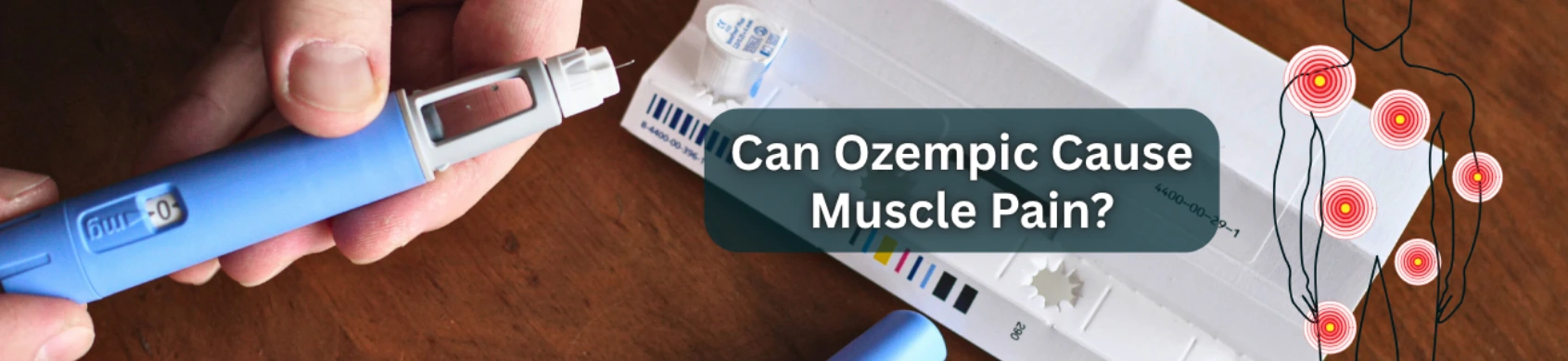
Ozempic, a drug commonly prescribed to manage type 2 diabetes, has recently gained popularity for weight loss. This medication has become a topic of interest among many, not just because of its therapeutic benefits, but also its potential side effects.
While nausea, vomiting, and fatigue are more commonly reported, some users have raised concerns about experiencing unexpected muscle pain.
This raises an important question: Does Ozempic actually cause muscle pain, or not?
In this blog, we’ll discuss what Ozempic is, how it works, what the science says about muscle pain, and what you should do if you experience this symptom while on the medication.
What Is Ozempic?
Ozempic is a medication that contains the active ingredient semaglutide. It belongs to a group of drugs called glucagon-like peptide-1 (GLP) receptor agonists.
Ozempic is a brand-name medicine that’s not currently available in generic form.
Ozempic is used to:
- Help manage blood sugar levels in type 2 diabetes in adults.
- It lowers the risk of certain blood vessel or heart problems in adults who have both diabetes and heart disease. These risks can include stroke, heart attack, and death due to heart or blood vessel issues.
- Lower the risk of kidney disease progression and heart-related death in people with diabetes and Chronic Kidney Disease (CKD) [1].
How Does Ozempic Work?
As already mentioned, Ozempic belongs to a class of drugs called glucagon-like peptide-1 receptor agonists (GLP-1 agonists). It works by binding to the GLP-1 receptors in the body, which enhances the effects of GLP-1.
GLP-1 is a hormone that is released from the intestine during food intake and has a powerful effect on regulating various bodily and brain functions. GLP-1 functions to stimulate the release of insulin while suppressing the release of glucagon. Insulin is a hormone that is responsible for lowering blood sugar levels in the body, while glucagon is another hormone that raises blood sugar levels from the pancreas. This leads to improved blood sugar control. Another role GLP-1 plays in the body is that it slows down gastric emptying, so you feel fuller, while also acting on specific brain receptors that promote a feeling of fullness (satiety) [2].
Can Ozempic Cause Muscle Pain?
Muscle pain is not a common side effect of Ozempic. In clinical trials of the drug, participants taking Ozempic as well as those taking a placebo did not report significant muscle pain.
However, they did note joint and back pain. Fewer people reported joint pain than those on a placebo, and the percentage of individuals mentioning back pain was almost the same across Ozempic vs placebo [3].
While Ozempic is not known to result in muscle pain, that does not mean that you can’t experience it while taking the medication. It just means that it may be more likely that your symptoms are due to a different cause than directly linked to the drug. Some possible reasons for muscle pain on Ozempic include pain near the injection site, overzealous exercise, and dehydration [4].
Injection site pain
Ozempic is taken weekly via an under-the-skin injection in the abdomen, upper arm, or thigh. You may experience swelling or bruising where you inject the medication, especially if you inject it in the same place every time. The needle goes under your skin, but it does not reach all the way into the muscle. Even so, swelling in the tissues above the muscle can cause muscle soreness.
Ozempic injections should not be too painful. To prevent site pain from Ozempic injection, don’t inject yourself in the same place twice in a row. You can rotate among your thigh, upper arm, or stomach.
Dehydration
Some of Ozempic’s adverse effects, such as diarrhea, nausea, and vomiting, can cause dehydration. This can occur due to GLP-1’s potential effect on the body’s ability to sense thirst. Dehydration, in turn, can lead to symptoms like thirst, darker urine, headache, and muscle cramps. Therefore, dehydration may be to blame for muscle pain on Ozempic.
Exercise
Ozempic is meant to be used in combination with lifestyle changes such as exercise and diet. If you are new to working out, your muscle pain may be related to exercise.
How Can You Manage Muscle Pain While On Ozempic?

If you experience muscle pain while taking Ozempic, consult your healthcare professional. They can help you understand the cause of your symptoms and recommend a treatment plan, whether that involves treating an underlying condition, adjusting your medicines, or continuing to lose weight.
Remember, don’t stop taking Ozempic until you speak to your healthcare team.
An effective treatment for your pain depends on the underlying cause of the symptoms. Sometimes your doctor may prescribe muscle relaxers like Carisoprodol, available under the brand Soma, or a nonsteroidal anti-inflammatory drug (NSAID) to help manage your pain.
However, you can help mild muscle pain go away with simple treatments like:
- Ice
- Rest
- Elevation of the part of your body that hurts.
There are several essential oils that can effectively help relieve sore muscles. These oils include lavender, peppermint, chamomile, and more.
Does Ozempic Cause Muscle Loss?
Research indicates that any kind of rapid weight loss, characteristic of Ozempic, may lead to muscle loss alongside fat loss. The extent of muscle loss varies among people and depends on factors such as exercise, diet, and overall well-being. Studies published in Endocrinology and Metabolism and Current Diabetes Reviews have found that Ozempic can lead to sarcopenia, which is characterized by loss of muscle function and strength. It’s typically linked with aging, but rapid weight loss without proper nutrition or workout can also cause sarcopenia [5] [6].
Other Ozempic Side Effects
The most commonly reported side effects of Ozempic are diarrhea, nausea, vomiting, loss of appetite, and stomach pain. These can often be mitigated by taking small, bland meals, avoiding high-fat and sugary foods, and increasing hydration.
However, in some cases, individuals experience more serious adverse effects when taking Ozempic, such as kidney problems, allergic reactions, small bowel obstruction, gallstones or gallbladder inflammation, and pancreatitis. If you experience any severe adverse effects while taking Ozempic, contact your healthcare professional right away or seek emergency medical attention [7].
Conclusion
Muscle pain is not a reported side effect of Ozempic. But some individuals do have these symptoms while taking Ozempic. This may be due to another reason, like injection-site pain, dehydration, or exercise. If you are experiencing muscle pain while taking Ozempic, talk to your healthcare provider so you can figure out what’s causing your pain and find the right treatment option.
FAQs
Can Semaglutide cause joint pain?
Does Ozempic cause dehydration?
How to maintain muscle while on Semaglutide?
What happens if you eat sugar while taking Ozempic?
Is there any link between Ozempic and back pain?
References
- Ozempic: Overview, How It Works, and More, Healthline
- Ozempic and Muscle Loss: Preserving Muscle Mass on GLP-1 Medications, hinge health
- Does Ozempic cause muscle and joint pain? Ro
- Can Ozempic Cause Joint and Muscle Pain? Goodrx
- Effects of Antidiabetic Drugs on Muscle Mass in Type 2 Diabetes Mellitus, ncbi
- A Review of the Effects of Glucagon-Like Peptide-1 Receptor Agonists and Sodium-Glucose Cotransporter 2 Inhibitors on Lean Body Mass in Humans, ncbi
- Can Ozempic cause muscle pain? Single Care